Employee Stock Ownership Program
Proud to be 100% Employee-Owned
The ESOP is a cornerstone of our robust staff benefits package. Employee ownership supports Wall’s person-centered practices, increases staff tenure and commitment, and enhances our culture of “all are leaders.”






Understanding ESOPs
What is an ESOP (Employee Stock Ownership Plan)?
An ESOP holds a company’s stock in a separate trust. A group of trustees manage the plan’s assets and act in the best interests of all ESOP participants. They work with an independent appraiser annually to set the stock value. Stock is given as a benefit of employment, creating a system where the people responsible for the company’s success have a vested interest in how it performs.
Employee Ownership
Being an ESOP helps our company thrive.
Employee ownership means staff have a stake in our overall success and in improving the experience of Providers and those we serve.
For Employees
The ESOP is a long-term, wealth-building plan designed to enhance employees’ retirement funds at no cost to the employee. In addition to receiving company stock, staff benefit from the teamwork and positive company culture an ESOP creates.
For Providers
Ownership leads to longer staff tenure and more dedicated employees who are truly committed to ensuring Providers receive the professional support they deserve.
For Clients
Increased staff tenure creates greater stability for the individuals we serve, among both program management and the DSPs who provide direct support in our agency-operated group homes and community-based services.
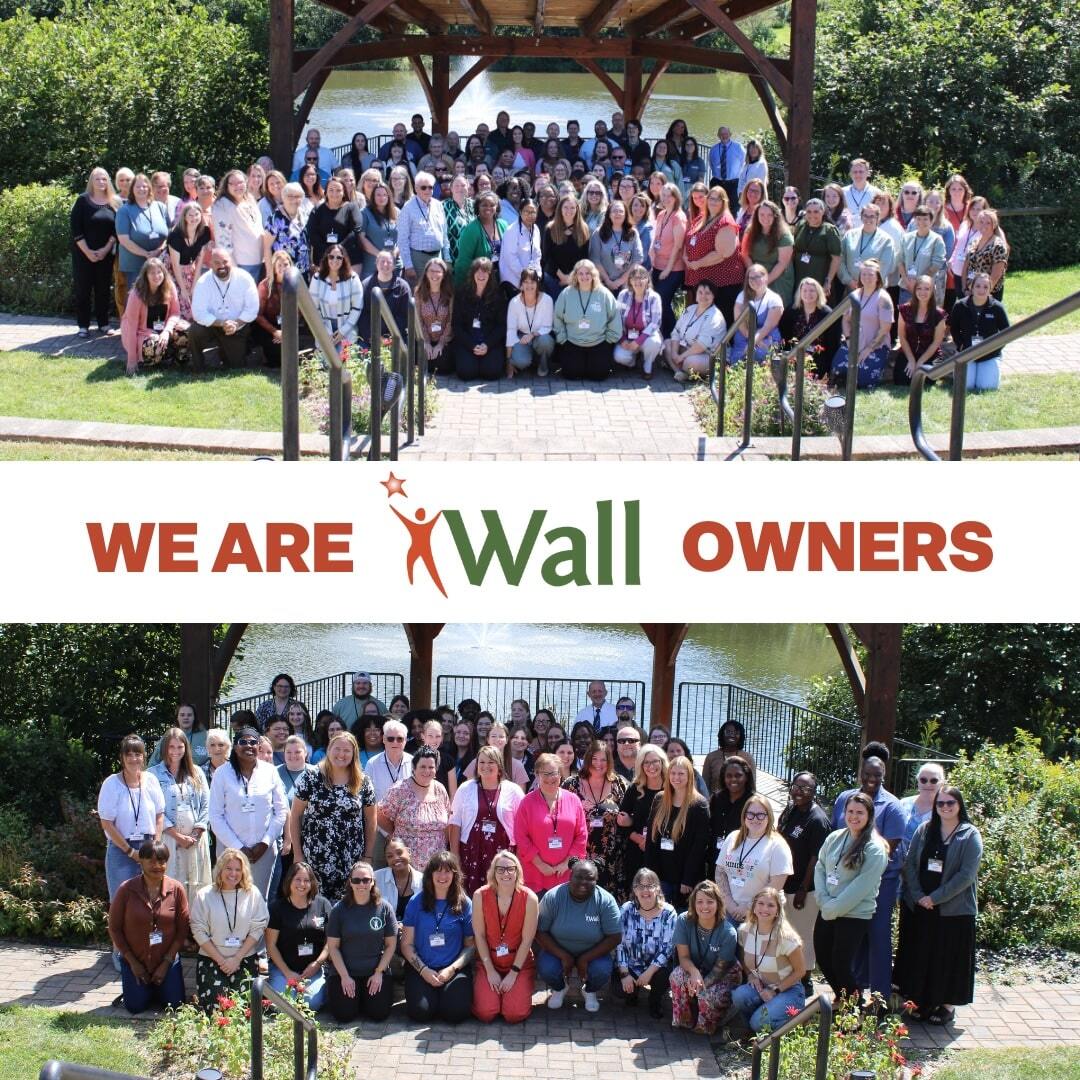
Meet our Owners
Our staff get more than just standard benefits… they become owners!
Our founders built Wall Residences differently from the beginning, focusing on people over profits. Being an ESOP maintains our unique culture and operational methods. The ownership benefit increases over time, encouraging long-term employee tenure. It also encourages staff to innovate as we continually improve how we serve our communities.
A Rare Distinction
There are just over 6,500 ESOPs in the United States and fewer than 250 in Virginia. Of those, only 2% are in the Health Care & Social Assistance industry.
Double the Retirement Savings
Research by NCEO (National Center for Employee Ownership) and ESCA (Employee-Owned S Corporations of America) shows that employee owners average more than double the retirement savings of those who don’t participate in an ESOP. The ESOP Association also reports that employee owners aged 60-64 average ten times more wealth than others in their age bracket.
Ownership Mindset
Studies show employee owners are twice as likely to report that their company seeks to create opportunities for their communities. While many companies try to build an “ownership mindset,” ESOP partners are true owners. This leads to a culture grounded in long-term vision, care for resources, responsibility, and willingness to take action.
Join Us
Become a Wall Employee Owner! Apply to join our team today.
FAQs
Learn More about ESOP
ESOP stands for Employee Stock Ownership Plan. Employees who meet minimum age and hours requirements earn company stock annually as a free benefit once they complete a year of service.
Our founders, Jack Wall and Kamala Bauers, began the process of transitioning Wall Residences to employee ownership more than a decade ago. The ESOP was formed in 2012 with the first transaction. Wall became 100% employee-owned in October 2020.
Jack and Kamala could have sold to larger companies at a significant profit. However, it was clear that selling to any of these organizations would have changed the culture and service model they built. They believed the best people to carry Wall forward were the leaders in their midst, the employees who understood the mission, valued quality, and upheld person-centered practices.
Yes! When we expanded from a single company, Wall Residences, to create Wall Connections and Wall Therapeutic Solutions, we also created Wall Holdings. Wall Holdings is the parent company for all Wall companies and all are part of our ESOP.
No. Contracted Providers cannot legally be employee owners. To retain the tax-free income allowed under Sponsored Residential governmental regulations, they must remain contractors. After extensive review, Jack and Kamala determined Providers were financially better served as contractors rather than employees.